
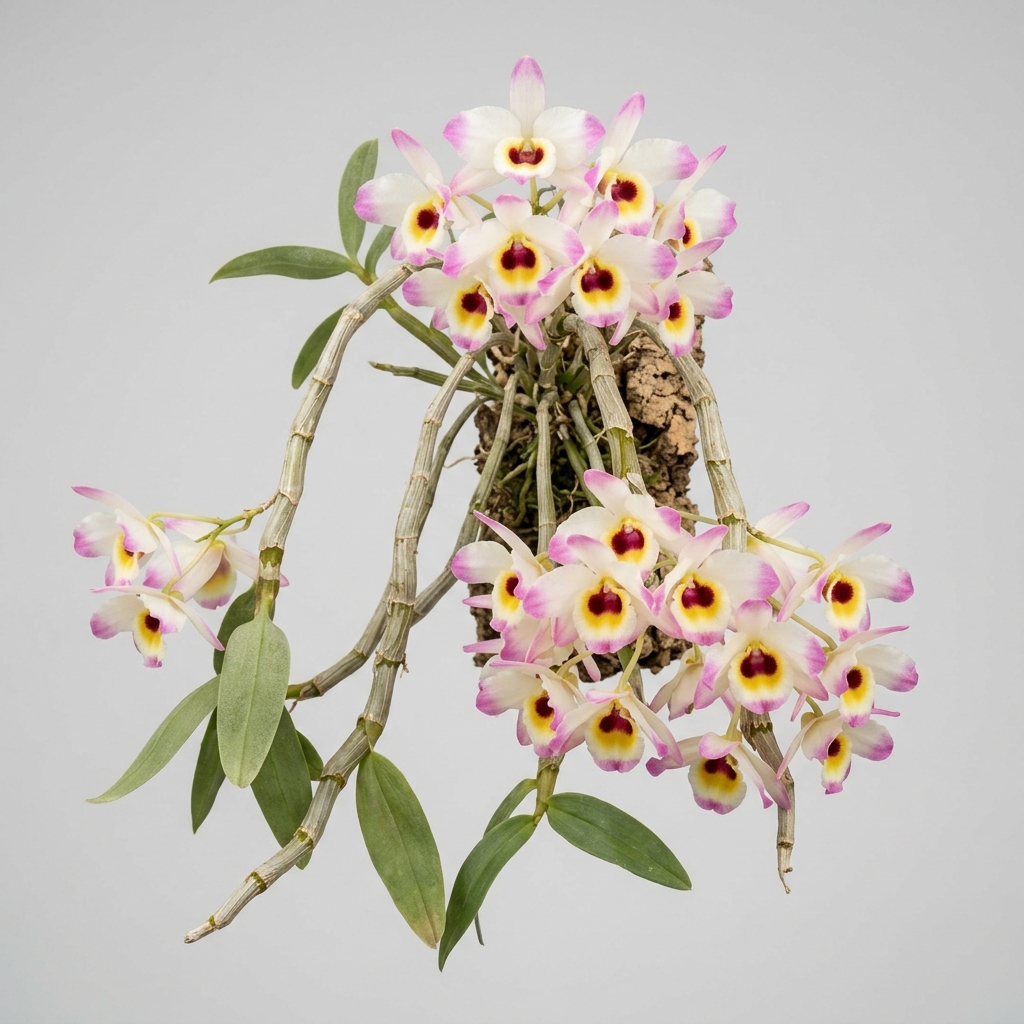
Dendrobium Wardianum is a highly celebrated epiphytic orchid species native to the montane forests of Southeast Asia and the Himalayan region. Revered by collectors for its dramatic pendulous growth habit and striking, multi-colored blossoms, this orchid brings a classic elegance to any indoor or greenhouse collection. Its long, cane-like pseudobulbs produce spectacular displays of waxy flowers that emerge from the nodes of mature, often leafless canes, making it a standout representative of the genus Dendrobium.
Cultivating this species successfully requires an understanding of its distinct seasonal growth cycle, which mirrors the monsoon climates of its native habitat. Growers value Dendrobium Wardianum not only for the sheer volume of its seasonal blooms but also for its resilience when provided with the correct environmental cues. By replicating its natural cycle of warm, wet summers followed by cool, dry winters, enthusiasts can enjoy reliable annual flower shows that last for several weeks.
💡 Did You Know?
Dendrobium Wardianum is named after Dr. Ward, a nineteenth-century English plant enthusiast who first flowered the species in Europe. In its native Himalayan habitats, it grows as an epiphyte on moss-covered trees, where its long, pendulous canes hang downward to shed heavy monsoon rains, a natural growth habit that makes it ideal for hanging baskets or mount cultivation.
🌿 Botanical Overview
Dendrobium Wardianum is characterized by its elongated, pendulous pseudobulbs, commonly referred to as canes, which can grow up to three feet in length under optimal conditions. These canes are swollen at the nodes, giving them a distinct jointed appearance that is highly characteristic of the species. The foliage consists of lanceolate, soft-textured leaves that line the active growth during the spring and summer months before naturally yellowing and dropping in the late autumn.
This deciduous nature is a vital evolutionary adaptation designed to conserve moisture during the dry winter months in its native high-altitude habitats. The root system is relatively fine and fibrous, adapted for clinging to mossy tree branches where it can rapidly absorb moisture and nutrients during heavy rain showers. Understanding this physical structure is key to selecting the appropriate mounting or potting method for the home grower.
🌸 Flower Characteristics
The flowers of Dendrobium Wardianum are exceptionally showy, typically measuring between two to three inches in diameter. They feature pristine white sepals and petals that are beautifully tipped with a delicate shade of rose-pink or light purple. The most striking feature, however, is the prominent, rounded lip or labellum, which boasts a bright golden-yellow center flanked by two deep maroon or purple eyespots at the throat, finished with a matching pink tip.
These blossoms are produced in small clusters of two to three from the nodes along the upper portions of the previous year’s canes. Because the canes often shed their leaves prior to blooming, the flowers are presented in an unobstructed, dramatic fashion along the pendulous stems. The waxy texture of the petals ensures that each bloom remains structurally sound and visually appealing for an extended period.
Fragrance & Bloom Profile
The fragrance of Dendrobium Wardianum is widely described as sweet, pleasant, and moderately intense, often carrying notes reminiscent of honey or fresh wildflowers. This scent is typically most pronounced during the morning hours when warmth and light stimulate the release of volatile compounds from the petals. The blooming period generally spans from late winter to early spring, providing a welcome burst of color and perfume when many other indoor plants remain dormant.
Individual flowers can remain fresh for three to four weeks, provided they are kept in a cool environment away from direct drafts and excessive heat. The overall longevity of the bloom display can be extended if the plant is moved to a slightly cooler, shaded location once the buds have fully opened.
Parentage & Hybrid Lineage
As a naturally occurring species rather than a man-made hybrid, Dendrobium Wardianum possesses a pure genetic lineage that has been documented by botanists since the nineteenth century. While it is not a cultivar in the traditional sense of being a selected garden hybrid, various horticultural selections and color forms, such as album or semi-album variations, exist within the trade.
In orchid breeding, this species has been utilized as a parent to introduce its large flower size, striking lip coloration, and pendulous growth habit to various Dendrobium hybrids. However, because registration records from early hybridization efforts can be inconsistent, growers should treat historical parentage claims with a degree of caution unless verified by modern registering authorities.
🌱 Growing Conditions
To thrive, Dendrobium Wardianum requires bright, filtered light, similar to the dappled sunlight found in a forest canopy. While it can tolerate some direct morning sun, hot afternoon rays should be avoided to prevent leaf scorch. High light levels are particularly important during the active summer growing season to ensure the canes develop sufficient energy reserves for winter blooming.
💡 Care Tip
Provide strong, continuous air movement around your Dendrobium Wardianum, especially during the hot, humid summer months. Good ventilation prevents fungal leaf spot diseases and helps the potting medium dry out rapidly between waterings, mimicking the breezy forest canopies of its native mountain habitat.
Temperature management is critical for this species. During the summer, it prefers warm conditions ranging from 75 to 85 degrees Fahrenheit. In contrast, the winter rest period requires significantly cooler temperatures, ideally dropping to 50 to 55 degrees Fahrenheit at night. Maintaining moderate to high humidity of 50 to 70 percent, coupled with strong air circulation, is essential to prevent stagnant air pockets and fungal issues.
Watering, Feeding & Potting Media
Watering practices must strictly follow the plant’s seasonal growth phases. During the active spring and summer growth period, the orchid should be watered copiously, keeping the potting medium consistently damp but never waterlogged. Weekly applications of a balanced, diluted orchid fertilizer will support the rapid development of new canes.
As autumn approaches and the leaves begin to yellow, watering must be progressively reduced, and fertilizing should be stopped entirely. During the winter rest, water should only be provided sparingly—just enough to prevent the canes from shriveling excessively. Coarse fir bark mixes, tree fern fiber, or mounting on cork slabs are the preferred potting methods, as they ensure the rapid drainage and root aeration this species demands.
Blooming Season & Care Notes
The primary blooming season occurs in late winter or early spring, triggered by the cool, dry winter dormancy. Once flower buds begin to swell at the nodes of the leafless canes, growers can gradually increase watering, though fertilizer should still be withheld until new vegetative growth emerges from the base of the plant.
After blooming is complete, the old flower stems can be left intact as they naturally dry up. Repotting should only be performed when new root growth is observed at the base of the emerging spring leads. This timing minimizes transplant shock and allows the fine roots to quickly establish themselves in the fresh, well-draining medium.
⚠️ Common Issues
⚠️ Common Mistake
The most common mistake is continuing to water and fertilize heavily during the winter months. Without a distinct dry and cool rest period, Dendrobium Wardianum will fail to produce flower buds and may instead produce vegetative keikis or suffer from devastating root rot.
- Bud Blast:
Sudden drops in humidity, cold drafts, or premature watering during the bud development phase can cause buds to yellow and drop before opening. - Cane Shriveling: While slight shriveling is normal during the winter rest, severe dehydration indicates a need for a light misting or a very sparse watering.
- Root Rot:
Overwatering during the winter dormancy or using a decomposed, water-retaining medium will quickly suffocate and rot the fine root system. - Pest Infestations: Spider mites and mealybugs can occasionally target the soft foliage or hide within the dry sheaths of the canes; regular inspection is recommended.
❓ Frequently Asked Questions
Why is my Dendrobium Wardianum losing its leaves in autumn?
This is a completely natural, deciduous process. Dendrobium Wardianum sheds its leaves in the autumn to prepare for its winter rest and later blooming cycle. Do not panic or increase watering; instead, reduce moisture to align with its dormancy.
How do I trigger blooms on this orchid?
Blooming is triggered by a cool, dry winter rest. Reduce watering significantly and lower night temperatures to around 50 to 55 degrees Fahrenheit for several weeks in late autumn and winter. Withhold fertilizer during this period.
Can I grow Dendrobium Wardianum mounted on wood?
Yes, mounting on cork bark or tree fern slabs is highly successful due to the pendulous growth habit of the canes. Mounted plants will require more frequent watering and high humidity during the active summer growing season.
What should I do with the canes after they finish flowering?
Leave the old canes intact. Even though they may lose their leaves and finished flowers, they act as vital energy and water reservoirs for the new growth emerging from the base of the plant.
⭐ Final Growing Notes
Dendrobium Wardianum remains a rewarding challenge for intermediate orchid growers who can accommodate its seasonal temperature and watering demands. By respecting its natural cycle of summer abundance and winter rest, you will be rewarded with a spectacular, fragrant display of waxy, multi-colored blossoms that epitomize the dramatic beauty of the Dendrobium genus.
⚕️ Health, Safety & Edibility
Understanding how a plant interacts with people, pets, and the surrounding environment is part of responsible cultivation. This section uses conservative, general guidance and does not replace professional medical or veterinary advice.
Human Safety: No published evidence currently identifies species-specific toxicity concerns for Dendrobium Wardianum during normal handling. As with most ornamental plants, it should not be intentionally consumed.
Pet Safety: Published information does not indicate that this orchid commonly poses a toxicity concern for cats or dogs. However, chewing leaves, flowers, roots, or potting media may still cause mild digestive upset.
Edibility: This orchid is cultivated for ornamental display rather than food. Ornamental plants may carry fertilizers, pesticides, or other horticultural treatments that make them unsuitable for consumption.
Skin Contact: Routine handling is not generally associated with skin irritation. Gardeners with sensitive skin may prefer wearing gloves when repotting, pruning, or handling potting media.
🌱 Propagation Tip
This species occasionally produces adventitious offsets, known as keikis, along the nodes of older canes. Allow these young plants to develop several roots at least two inches long before carefully detaching them and potting them in a fine bark mix or mounting them on cork.
⭐ Expert Advice
When growing this orchid in a pot, use a heavy clay pot or secure the container to prevent it from tipping over. The long, pendulous canes can become top-heavy, especially when loaded with water or blooms, making a weighted pot or hanging basket the safest choice.

Leave A Comment