
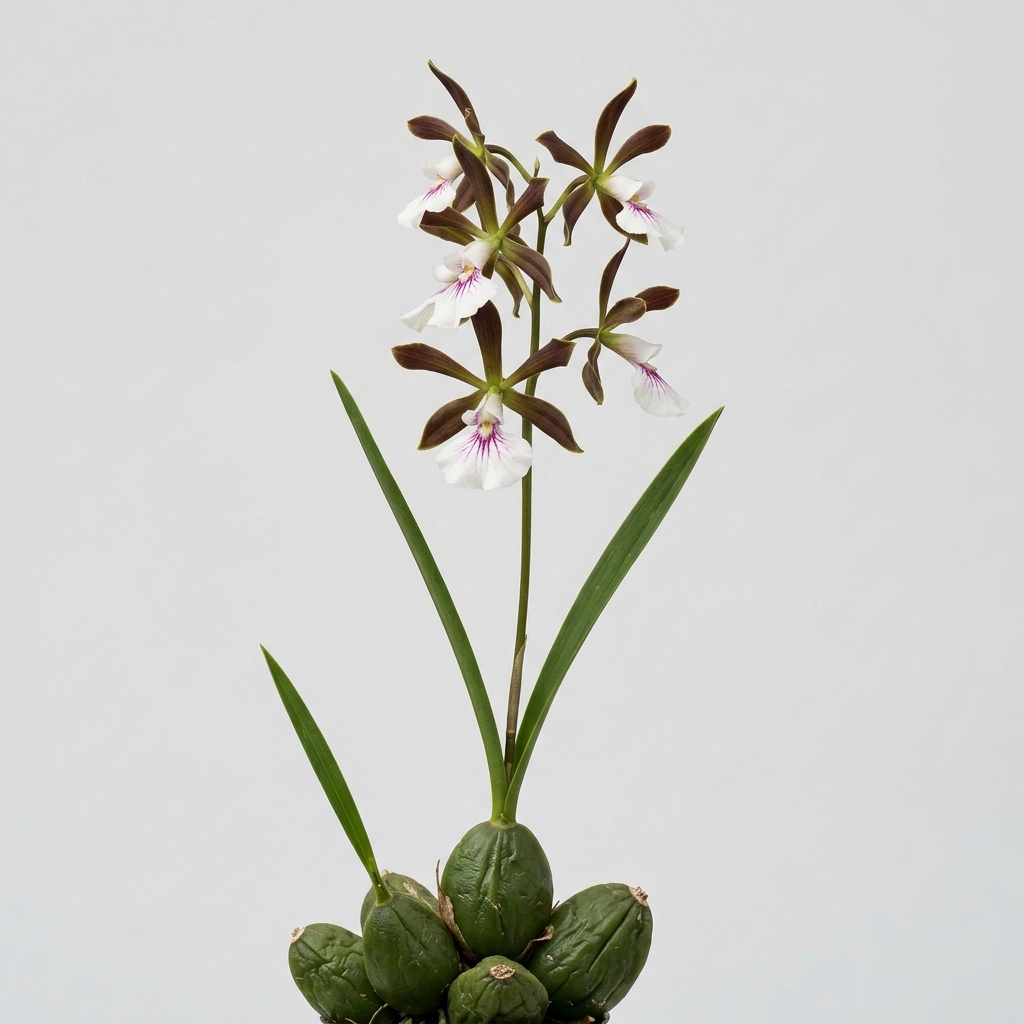
Encyclia Bractescens is a charming, miniature-to-small epiphytic orchid species highly prized by collectors for its delicate growth habit and remarkably showy blossoms. Native to the seasonally dry forests of Mesoamerica, this resilient orchid produces clustered, globose pseudobulbs topped with slender, grass-like leaves. Growers value the species for its ability to produce disproportionately large, long-lasting flowers that present a striking contrast between their dark, slender petals and a bright, expansive labellum.
In cultivation, Encyclia Bractescens is celebrated for its adaptability and relatively uncomplicated care requirements, making it an excellent choice for both intermediate growers and ambitious beginners. Its compact size allows it to thrive in limited spaces, such as terrariums, small windowsills, or mounted displays. When provided with bright, filtered light and distinct wet and dry seasonal cycles, this orchid rewards keepers with a spectacular annual display of elegant, fragrant blooms.
💡 Did You Know?
Unlike many larger orchids that require substantial space, Encyclia Bractescens is a true space-saver, often producing flower spikes that are longer than the plant is tall. Its unique onion-shaped pseudobulbs act as highly efficient water storage organs, allowing the plant to survive prolonged dry seasons on the exposed branches of its native tropical dry forests.
🌿 Botanical Overview
Encyclia Bractescens is a distinct species within the genus Encyclia, characterized by its clustering, onion-shaped pseudobulbs. These small, globose pseudobulbs are typically tightly packed together, forming dense mats over time. Each pseudobulb is crowned by two or three narrow, linear leaves that are stiff and grass-like, helping the plant conserve moisture during dry spells in its native habitat.
In the wild, this epiphyte is found growing on tree trunks and branches in low-elevation, seasonally dry forests across Mexico, Belize, Guatemala, Honduras, and El Salvador. Its natural environment experiences distinct wet and dry seasons, a factor that heavily influences its growth cycle and cultural requirements in home or greenhouse environments.
🌸 Flower Characteristics
The inflorescence of Encyclia Bractescens emerges from the apex of mature pseudobulbs, producing an erect or slightly arching spike that can bear several flowers. The blossoms are relatively large compared to the diminutive size of the plant, often measuring up to an inch or more in diameter.
The sepals and petals are narrow, spreading, and typically display a deep bronze, brown, or purplish-green hue. This dark backdrop perfectly accentuates the prominent, broad labellum (lip). The lip is predominantly white or pale rose, adorned with striking magenta or purple veins radiating from the center, creating a highly attractive focal point that draws the eye of growers and pollinators alike.
Fragrance & Bloom Profile
Many growers report that Encyclia Bractescens produces a delightful, sweet fragrance that is most noticeable during the warm, bright hours of midday. The scent is frequently described as honey-like or mildly floral, though the intensity and exact notes can vary depending on individual plant genetics and environmental conditions such as temperature and humidity.
The flowers are exceptionally long-lasting, often remaining fresh on the spike for six to eight weeks. This extended bloom profile, combined with the plant’s compact growth habit, makes it a highly rewarding subject for indoor display during its peak flowering period.
Parentage & Hybrid Lineage
As a naturally occurring species rather than a man-made hybrid, Encyclia Bractescens possesses a pure genetic lineage shaped by natural selection in its native Mesoamerican habitats. In orchid taxonomy, it remains a recognized species, though it has occasionally been utilized by hybridizers looking to introduce compact growth habits, striking lip patterns, and temperature tolerance into new Encyclia or Epidendrum crosses.
Because registration records and hybrid lineages can sometimes be complex or inconsistently documented in general hobbyist literature, growers interested in specific hybrid offspring should consult official registration databases. For most collectors, the wild-type species itself remains the most sought-after form due to its classic, balanced proportions.
🌱 Growing Conditions
To cultivate Encyclia Bractescens successfully, providing bright, filtered light is paramount. It thrives in conditions similar to those favored by Cattleyas, requiring strong but indirect sunlight to encourage robust pseudobulb development and abundant flowering. A slight yellow-green tint to the foliage often indicates that the light level is optimal.
💡 Care Tip
To achieve the perfect balance of moisture and aeration, try mounting Encyclia Bractescens on a rough cork slab with a small pad of sphagnum moss around the roots. This setup allows the roots to dry rapidly after , closely mimicking its natural epiphytic habitat.
Temperature: wise, this orchid is quite adaptable, preferring warm to intermediate conditions. Daytime temperatures between 75°F and 85°F (24°C to 29°C) are ideal, with a nighttime drop of 10 to 15 degrees to stimulate healthy metabolic processes. Adequate air movement is critical at all times to prevent stagnant air pockets, which can invite fungal pathogens, especially in high-humidity environments.
Watering, Feeding & Potting Media
During the active growing season in spring and summer, Encyclia Bractescens requires frequent and thorough watering. The potting medium should be allowed to dry out almost completely between waterings, as the roots are highly sensitive to prolonged saturation. Applying a balanced, diluted orchid fertilizer every two to three weeks during active growth supports healthy new pseudobulbs.
Because of its epiphytic nature, this species performs exceptionally well when mounted on cork bark or tree fern slabs, which mimics its natural growing habit and ensures rapid drainage. If potted, a highly porous, coarse medium such as medium-grade fir bark mixed with perlite or charcoal is essential. Avoid fine mixes that retain moisture for extended periods.
Blooming Season & Care Notes
The primary blooming season for Encyclia Bractescens occurs in late winter and throughout the spring months. As the new pseudobulbs mature in late autumn, the plant naturally transitions into a semi-dormant rest period. During this cooler winter phase, watering should be significantly reduced, providing only enough moisture to prevent the pseudobulbs from shriveling excessively.
Once the flower spikes begin to emerge from the top of the pseudobulbs in early spring, regular watering and light feeding can gradually resume. After flowering is complete, avoid cutting the green spikes until they have completely dried out, and plan any necessary repotting or mounting adjustments for the period immediately following the bloom cycle when new root growth begins.
⚠️ Common Issues
⚠️ Common Mistake
The most common mistake is overwatering during the winter rest period. Keeping the potting medium constantly wet when the orchid is semi-dormant will quickly lead to root rot, which can severely set back or even kill the plant before the spring blooming season.
- Root Rot:
Caused by overwatering or compacted, poorly draining potting media. Ensure the roots dry rapidly after watering. - Pseudobulb Shriveling: A sign of dehydration, which can occur during an excessively dry winter rest or due to root loss from rot.
- Scale and Mealybugs: These pests can hide in the dry sheaths surrounding the pseudobulbs. Inspect the plant regularly and treat with horticultural soap or neem oil if detected.
- Bud Blast:
Sudden drops in humidity or drafts can cause developing flower buds to yellow and drop before opening. - Leaf Spotting: Fungal or bacterial spots can develop if water is allowed to sit on the foliage overnight without adequate air circulation.
❓ Frequently Asked Questions
Can Encyclia Bractescens be grown indoors under LED lights?
Yes, Encyclia Bractescens adapts well to indoor cultivation under high-intensity LED grow lights. Position the plant close enough to the light source to receive bright, indirect light, ensuring the foliage does not overheat, and maintain a consistent day-night light cycle.
How often should I water a mounted Encyclia Bractescens?
Mounted specimens dry out much faster than potted ones. During the hot summer months, a mounted Encyclia Bractescens may require daily misting or watering, whereas in the winter rest period, watering should be reduced to once or twice a week depending on ambient humidity.
Why are the pseudobulbs on my orchid shriveling?
Slight shriveling during the winter rest is normal and indicates the plant is conserving energy. However, severe shriveling during the active growing season usually points to either underwatering or root damage from overwatering, which prevents the plant from absorbing moisture.
Does Encyclia Bractescens require a strict winter rest?
While not as extreme as some orchid species, a distinct winter rest with reduced watering and cooler temperatures is highly beneficial. This seasonal cue mimics its natural habitat and is often necessary to trigger robust flower spike development in the spring.
⭐ Final Growing Notes
Encyclia Bractescens is a rewarding and visually captivating orchid that brings a touch of Mesoamerican wilderness to any collection. By respecting its natural cycle of wet summers and dry winters, providing bright light, and ensuring excellent root aeration, growers can enjoy its fragrant, long-lasting blooms year after year. Its compact footprint and resilient nature make it a timeless favorite for orchid enthusiasts of all experience levels.
⚕️ Health, Safety & Edibility
Understanding how a plant interacts with people, pets, and the surrounding environment is part of responsible cultivation. This section uses conservative, general guidance and does not replace professional medical or veterinary advice.
Human Safety: No published evidence currently identifies species-specific toxicity concerns for Encyclia Bractescens during normal handling. As with most ornamental plants, it should not be intentionally consumed.
Pet Safety: Published information does not indicate that this orchid commonly poses a toxicity concern for cats or dogs. However, chewing leaves, flowers, roots, or potting media may still cause mild digestive upset.
Edibility: This orchid is cultivated for ornamental display rather than food. Ornamental plants may carry fertilizers, pesticides, or other horticultural treatments that make them unsuitable for consumption.
Skin Contact: Routine handling is not generally associated with skin irritation. Gardeners with sensitive skin may prefer wearing gloves when repotting, pruning, or handling potting media.
🌱 Propagation Tip
Propagation is best achieved by division during repotting, ensuring that each new division has at least three to four healthy, mature pseudobulbs. Avoid dividing the plant too frequently, as larger, established specimens produce far more impressive and dense flowering displays.
⭐ Expert Advice
If your Encyclia Bractescens is healthy but failing to bloom, try gradually increasing the intensity and ensuring a distinct drop of 10 to 15 degrees Fahrenheit between day and night during the autumn months. This thermal shift is a powerful trigger for spike initiation.

Leave A Comment