
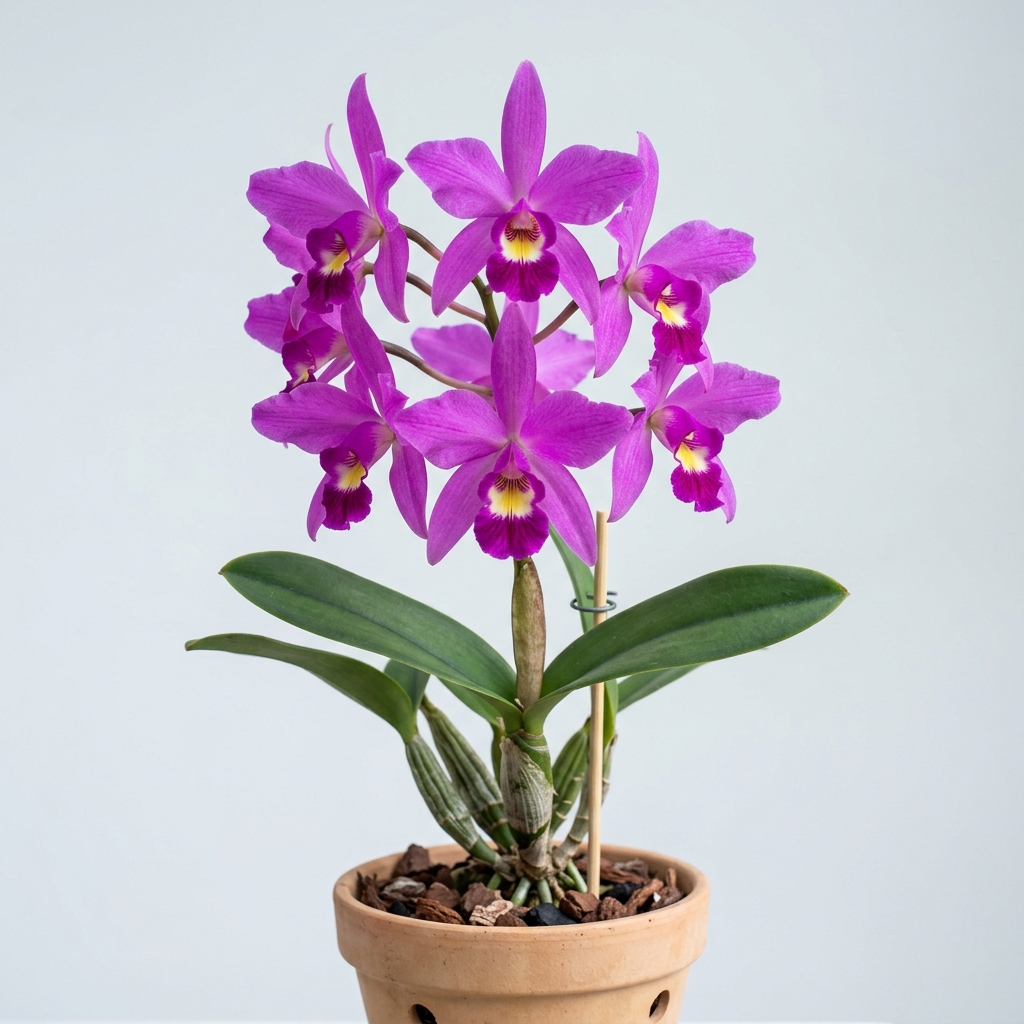
Laelia Gouldiana is a highly prized orchid known for its striking magenta blooms and elegant growth habit. Belonging to the renowned genus Laelia, this orchid has captured the fascination of collectors for generations due to its vibrant winter display and architectural symmetry. Its resilience and spectacular floral presentation make it a standout addition to any intermediate orchid collection.
Growers particularly value this orchid for its ability to produce long-lasting flowers during the darker winter months. While it requires a specific seasonal rhythm to thrive, its robust nature rewards attentive care with a dramatic burst of color when most other plants are dormant. Understanding its natural cycle is the key to unlocking its full blooming potential.
💡 Did You Know?
Laelia Gouldiana is widely believed to be extinct in its native wild habitats of Mexico. Today, this spectacular orchid survives entirely in cultivation, preserved by dedicated hobbyists, commercial growers, and botanical gardens who maintain its genetic lineage through careful division and seed sowing.
🌿 Botanical Overview
Laelia Gouldiana shows a classic sympodial growth habit typical of many Mexican Laelia species. The plant produces plump, pear-shaped or spindle-shaped pseudobulbs that serve as water-storage organs during dry periods. Each mature pseudobulb is topped by two or three stiff, leathery, dark green leaves that are highly adapted to conserving moisture in bright environments.
Historically native to the mountainous regions of Mexico, this orchid evolved to grow as an epiphyte on trees or occasionally as a lithophyte on rocky cliffs. These high-altitude habitats experience distinct seasonal shifts, characterized by a wet, humid summer growing season followed by a cool, dry winter. Cultivators must replicate these environmental transitions to maintain long-term plant health.
🌸 Flower Characteristics
The blossoms of Laelia Gouldiana are celebrated for their intense, saturated coloration. The flowers typically measure between 3 to 4 inches in diameter and are borne on tall, arching spikes that emerge from the apex of the newest pseudobulbs. A single inflorescence can carry multiple flowers, creating a dramatic, clustered display that stands well above the foliage.
The petals and sepals are sharply pointed and display a rich magenta-purple hue. The prominent three-lobed lip, or labellum, features a deeper purple coloration at the margins, contrasting beautifully with a white and bright yellow throat. This intricate color pattern serves as a natural guide for pollinators in the wild.
Fragrance & Bloom Profile
This orchid is known to produce a delicate, sweet, floral fragrance that is most noticeable during warm, sunny mornings. While the scent is generally described as pleasant and subtle, its intensity can vary depending on environmental factors such as temperature, humidity, and light levels. In cooler indoor environments, the fragrance may remain faint.
The blooming cycle typically begins in late autumn and extends into the winter months. Individual flowers are remarkably durable, often remaining fresh for four to six weeks if the plant is kept in a cool, draft-free location. This long-lasting quality makes it a highly desirable subject for winter exhibitions.
Parentage & Hybrid Lineage
The precise botanical status of Laelia Gouldiana has been a subject of discussion among taxonomists. While traditionally classified as a distinct species, some historical and genetic analyses suggest it may have originated as a natural hybrid, possibly involving Laelia autumnalis and another Mexican Laelia species. Because wild populations are virtually non-existent today, confirming its exact evolutionary lineage remains challenging.
In the horticultural trade, it is treated and grown as a distinct entity. It has been used in hybridizing programs to introduce its intense magenta coloration, upright flower spikes, and cool-tolerance to modern intergeneric hybrids. However, the primary form remains the most popular among purist collectors.
🌱 Growing Conditions
To grow this orchid successfully, provide bright, indirect light. It can tolerate some direct morning sun, but hot afternoon sunlight should be filtered to prevent leaf scorch. A light green leaf color indicates the plant is receiving the ideal amount of light, while dark green leaves suggest it needs more brightness.
💡 Care Tip
Provide strong air movement around your orchid at all times. High combined with stagnant air can quickly lead to bacterial rot or fungal leaf spot, especially during the cooler winter months when the plant is resting.
Temperature management is crucial for this cool-to-intermediate grower. During the summer, daytime temperatures can rise to 80F, but night temperatures should ideally drop into the 60s. In the winter, the plant benefits from cooler conditions, with night temperatures dropping to 50F or slightly lower, which helps stimulate the development of flower buds.
Watering, Feeding & Potting Media
During the active spring and summer growing season, water the plant thoroughly, allowing the potting medium to dry out almost completely between waterings. Apply a balanced, highly diluted orchid fertilizer weekly during this active phase to support the development of robust new pseudobulbs.
Because of its epiphytic nature, this orchid requires exceptional drainage. A coarse potting mix consisting of large fir bark pieces, charcoal, and perlite works well in clay pots. Alternatively, many growers prefer mounting the plant on cork bark slabs, which allows the roots to dry rapidly after watering and mimics its natural growing habit.
Blooming Season & Care Notes
The transition into the blooming season requires a significant shift in care. As the new pseudobulbs mature in late autumn, gradually reduce watering to initiate a dry rest period. This dry rest, combined with cooler night temperatures, is essential for triggering the emergence of the flower spike.
During this rest phase, water should only be provided sparingly—just enough to prevent the pseudobulbs from shriveling excessively. Once the flower buds begin to swell and open, light misting can help maintain humidity around the blossoms. Resume regular watering and feeding only when new root tips and green shoots emerge in the spring.
⚠️ Common Issues
⚠️ Common Mistake
The most common mistake is too frequently during the winter rest period. Excessive moisture when the plant is inactive and temperatures are cool will rapidly rot the root system, leading to the eventual decline of the orchid.
- Root rot caused by overwatering, particularly during the cool winter rest period when the plant is inactive.
- Bud blast, where developing flower buds turn yellow and drop, often triggered by sudden temperature fluctuations or low humidity.
- Scale insects and mealybugs, which frequently hide under the dry, papery sheaths of the pseudobulbs.
- Severe pseudobulb shriveling, indicating extreme dehydration from an excessively prolonged dry rest without occasional ambient moisture.
❓ Frequently Asked Questions
How do I trigger blooming in Laelia Gouldiana?
To trigger blooming, you must provide a distinct dry rest period in late autumn along with cooler night temperatures. Reduce watering significantly once the new pseudobulbs mature, and ensure night temperatures drop to around 50F to 55F to stimulate flower spike development.
Can Laelia Gouldiana be grown mounted on wood?
Yes, this orchid performs exceptionally well when mounted on cork bark or hardwood mounts. Mounting accommodates its natural epiphytic growth habit and ensures the roots dry rapidly, which drastically reduces the risk of root rot.
Why are the pseudobulbs on my orchid shriveling?
Slight shriveling during the winter rest is normal. However, severe shriveling during the active growing season usually indicates either underwatering or root loss due to overwatering, which prevents the plant from absorbing moisture.
What type of light does this orchid prefer?
It prefers bright, indirect light. It can tolerate some direct morning sun, but requires shading during the hottest part of the day. The leaves should maintain a healthy light-green color; dark green leaves indicate insufficient light.
⭐ Final Growing Notes
Laelia Gouldiana remains an iconic representative of the Mexican Laelia group, offering unparalleled winter beauty to those who respect its seasonal requirements. By providing bright light, excellent air circulation, and a disciplined dry winter rest, growers can enjoy its spectacular magenta blossoms year after year, preserving a classic horticultural treasure that is now lost to the wild.
⚕️ Health, Safety & Edibility
Understanding how a plant interacts with people, pets, and the surrounding environment is part of responsible cultivation. This section uses conservative, general guidance and does not replace professional medical or veterinary advice.
Human Safety: No published evidence currently identifies species-specific toxicity concerns for Laelia Gouldiana during normal handling. As with most ornamental plants, it should not be intentionally consumed.
Pet Safety: Published information does not indicate that this orchid commonly poses a toxicity concern for cats or dogs. However, chewing leaves, flowers, roots, or potting media may still cause mild digestive upset.
Edibility: This orchid is cultivated for ornamental display rather than food. Ornamental plants may carry fertilizers, pesticides, or other horticultural treatments that make them unsuitable for consumption.
Skin Contact: Routine handling is not generally associated with skin irritation. Gardeners with sensitive skin may prefer wearing gloves when repotting, pruning, or handling potting media.
🌱 Propagation Tip
Propagate this orchid by division during the spring when new root growth begins. Ensure each division has at least three to four healthy, mature pseudobulbs to support the plant as it establishes itself in its new container or mount.
⭐ Expert Advice
Keep a close eye on the protective papery sheaths surrounding the pseudobulbs. These dry sheaths can harbor pests like scale and mealybugs; gently peeling away loose, dry sheaths helps expose these pests and keeps the plant clean.

Leave A Comment