
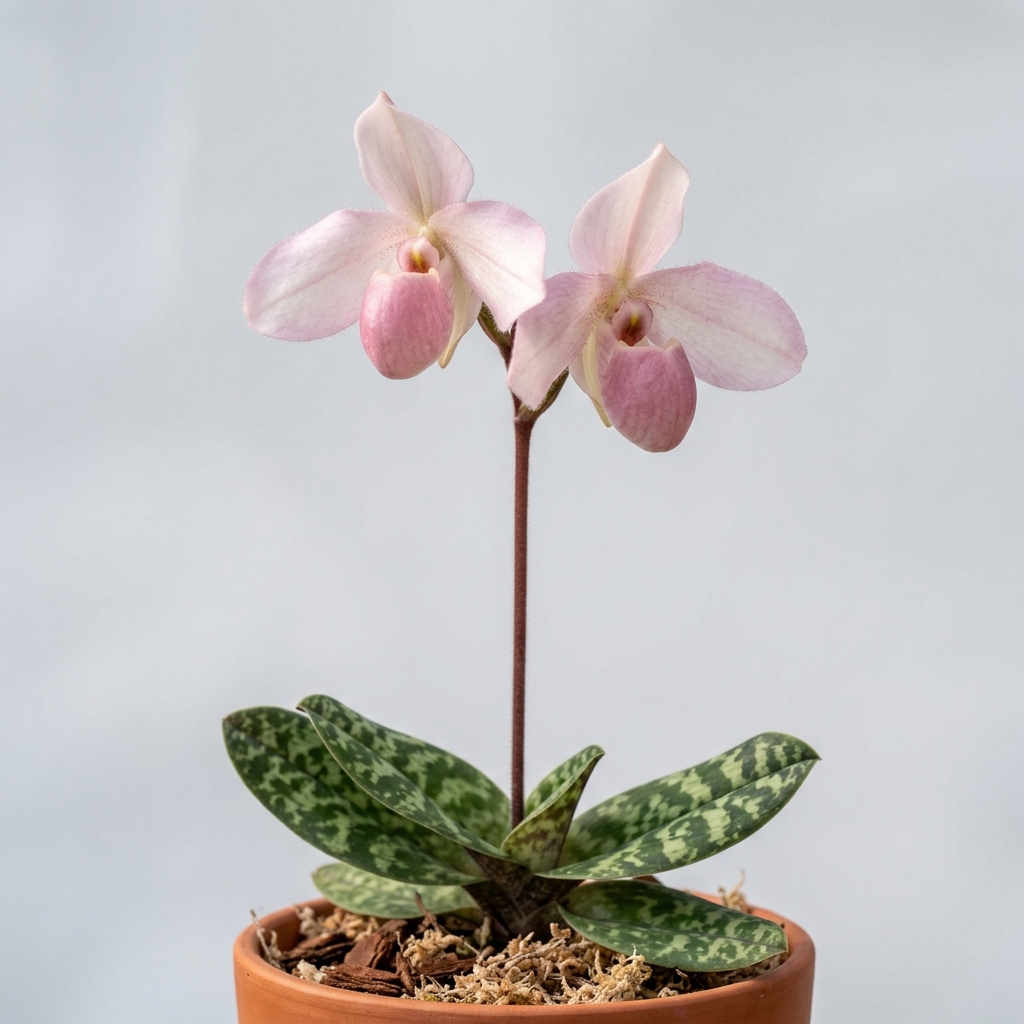
Paphiopedilum delenatii is a highly prized slipper orchid species celebrated for its soft pink blossoms and striking variegated foliage. Originating from Vietnam, this elegant orchid stands out in the genus Paphiopedilum due to its unique color palette and relatively compact growth habit, making it a favorite among indoor growers and greenhouse collectors alike.
Unlike many of its green-leaved relatives, this species features beautifully mottled leaves that provide year-round visual interest even when the plant is not in bloom. Growers value it not only for its delicate, pouch-shaped flowers but also for its adaptable nature, which allows it to thrive in standard home environments when provided with consistent moisture and moderate humidity.
💡 Did You Know?
Paphiopedilum delenatii belongs to the Paphiopedilum orchid group, where flower presentation is often just as important as . White-flowered cultivars are especially valued indoors because their pale blooms reflect well and pair easily with many home, greenhouse, and display settings.
🌿 Botanical Overview
Paphiopedilum delenatii is a terrestrial or lithophytic orchid native to the primary montane forests of Vietnam. It typically grows in shady, humid environments, often nestled in leaf litter on granite cliffs or steep slopes. This natural habitat dictates its preference for consistent moisture and protection from direct sunlight.
The vegetative growth of this species is highly ornamental. The leaves are oblong-elliptic, featuring a distinctive dark green and pale green tessellated pattern on the upper surface, while the undersides are often heavily spotted with purple. This compact growth habit makes it an excellent choice for space-conscious collectors.
🌸 Flower Characteristics
The flowers of Paphiopedilum delenatii are renowned for their delicate, rounded form and soft coloration. Typically measuring 3 to 4 inches in diameter, the blossoms feature broad, overlapping petals and a prominent, inflated pouch-like labellum. The color ranges from pure white to a soft, pastel pink, often with a deeper rose or magenta flush on the interior of the pouch.
The inflorescence is upright, covered in fine purple hairs, and usually bears one to two flowers per spike. The presentation is exceptionally clean, with the flowers held well above the foliage, creating a striking contrast against the dark, mottled leaves.
Fragrance & Bloom Profile
One of the most remarkable features of Paphiopedilum delenatii is its fragrance, which is a rare trait among slipper orchids. The blooms often emit a subtle, sweet scent reminiscent of fresh roses or light citrus. This fragrance is typically most noticeable during the warmer hours of midday when light and temperature levels peak.
The blooms are long-lasting, frequently remaining pristine for six to eight weeks. Individual flowers open sequentially or simultaneously if the spike carries multiple buds, extending the overall display period.
Parentage & Hybrid Lineage
As a distinct species rather than a complex artificial hybrid, Paphiopedilum delenatii represents a fundamental building block in slipper orchid hybridization. It has been widely used by breeders to introduce pink coloration, rounded flower segments, and fragrance into modern Paphiopedilum hybrids.
While its exact wild origins were shrouded in mystery for decades following its initial discovery in the early 20th century, line-breeding in cultivation has significantly improved the vigor and flower quality of available specimens. Today, most cultivated plants are the result of generations of selective sibling crosses rather than wild collection.
🌱 Growing Conditions
To cultivate Paphiopedilum delenatii successfully, replicate its natural forest understory habitat. It thrives in low to moderate, filtered light, similar to the requirements of Phalaenopsis orchids. Avoid direct sunlight, which can easily scorch the variegated foliage and cause the leaf patterns to fade.
💡 Care Tip
For best results, grow Paphiopedilum delenatii in bright filtered with steady and gentle airflow. Avoid placing the plant in harsh midday sun, but do not keep it in a dark corner; weak is one of the most common reasons cultivated orchids refuse to rebloom.
Temperature: wise, this orchid prefers intermediate to warm conditions. Ideal daytime temperatures range from 75°F to 85°F, with a night drop to 60°F or 65°F. Good air movement is essential to prevent stagnant air pockets, which can lead to bacterial or fungal leaf spotting.
Watering, Feeding & Potting Media
Unlike epiphytic orchids with pseudobulbs, Paphiopedilums do not store large reserves of water. Consequently, the potting medium should remain consistently damp but never waterlogged. Water the plant thoroughly just as the medium approaches dryness, using pure water such as rainwater, distilled water, or reverse osmosis water, as this species is sensitive to mineral salts.
A well-draining, moisture-retentive mix is critical. A combination of fine-grade fir bark, perlite, charcoal, and chopped sphagnum moss works exceptionally well. Feed weekly with a highly diluted, balanced orchid fertilizer, and flush the pot with pure water once a month to prevent salt accumulation.
Blooming Season & Care Notes
The primary blooming season for Paphiopedilum delenatii occurs from late winter through late spring. The initiation of flower spikes is often triggered by the natural drop in nighttime temperatures during the autumn months.
Once the flower spike emerges, avoid changing the plant’s orientation relative to the light source, as this can cause the buds to twist or develop unevenly. After the flowers fade, cut the spike down to the base of the growth. Repotting is best done in late spring or early summer, immediately after flowering, to allow the new roots to establish in fresh media.
⚠️ Common Issues
⚠️ Common Mistake
The most common mistake is by calendar instead of root and potting-media condition. Paphiopedilum roots need moisture and air at the same time, so constantly wet bark or sphagnum can lead to root loss even when the leaves still look healthy.
- Root rot: Caused by overwatering or compacted, poorly draining potting media.
- Leaf spot: Fungal or bacterial pathogens can cause dark spots on the foliage if air circulation is inadequate or water sits on the leaves overnight.
- Bud blast: Sudden changes in temperature, low humidity, or drafty conditions can cause developing buds to yellow and drop before opening.
- Mealybugs and scale: These pests can hide in the tight crevices at the base of the leaves and under the flower bracts.
- Salt burn: Brown, dying leaf tips often indicate a buildup of fertilizer salts or the use of hard tap water.
❓ Frequently Asked Questions
How often should I water Paphiopedilum delenatii?
Watering frequency depends on your home environment, but typically, this orchid should be watered every 5 to 7 days. The goal is to keep the potting medium evenly moist. Never allow the mix to dry out completely, but ensure the pot drains freely so the roots never sit in standing water.
Can I grow Paphiopedilum delenatii under LED grow lights?
Yes, this species adapts exceptionally well to artificial lighting. Place the plant under moderate-intensity LED grow lights, ensuring it receives about 10 to 12 hours of light daily. Keep the foliage at a safe distance from the light source to prevent heat stress or leaf bleaching.
Why are the leaf tips of my Paphiopedilum turning brown?
Brown leaf tips are usually a sign of mineral salt accumulation in the potting medium or the use of hard water. Switch to rainwater, distilled water, or reverse osmosis water, and thoroughly flush the pot with pure water to wash away residual fertilizer salts.
Is Paphiopedilum delenatii suitable for beginner orchid growers?
While it requires slightly more attention to watering than a standard Phalaenopsis, it is considered one of the easier and more forgiving slipper orchids. Its compact size, beautiful foliage, and tolerance for typical household temperatures make it an excellent choice for adventurous beginners.
⭐ Final Growing Notes
Paphiopedilum delenatii remains a crown jewel of the slipper orchid world, offering a delightful combination of striking mottled foliage, soft pink blossoms, and a rare, sweet fragrance. By maintaining consistent moisture, providing gentle filtered light, and using high-quality water, growers of all experience levels can successfully cultivate this Vietnamese treasure and enjoy its elegant seasonal display for years to come.
🌱 Propagation Tip
Propagation should be approached patiently. Most home growers should wait for natural keikis or divide only mature, healthy plants when the orchid type allows it. Never remove a young growth until it has strong roots and enough leaves to support itself away from the parent plant.
⭐ Expert Advice
Repot after flowering when fresh root tips begin to appear. This timing helps the plant anchor quickly into new bark or sphagnum and reduces stress, especially for orchids grown indoors where airflow, , and drying speed can change from season to season.




Leave A Comment