
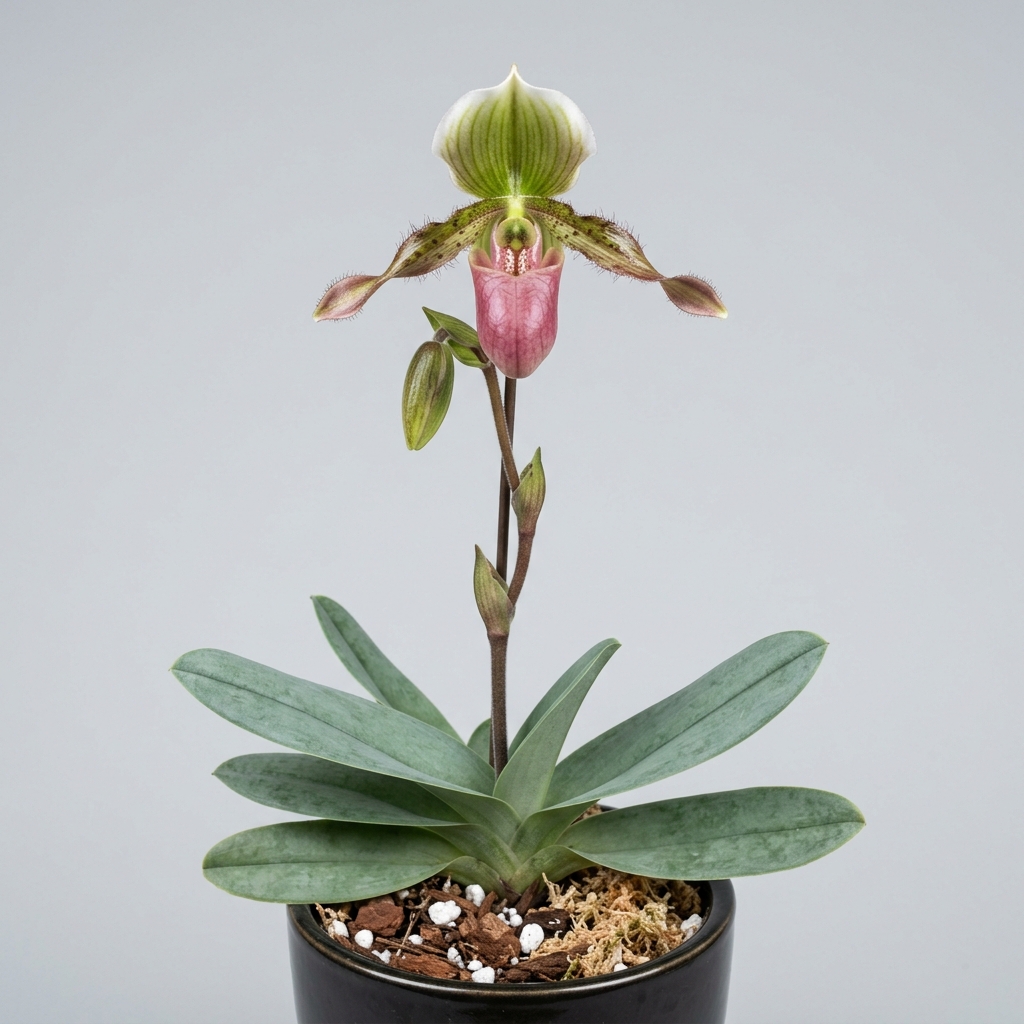
Paphiopedilum Glaucophyllum is a highly esteemed slipper orchid species native to the volcanic slopes of Java, Indonesia. Renowned among collectors for its striking foliage and unique floral presentation, this terrestrial orchid brings a touch of exotic elegance to indoor collections. Its common name, the glaucous-leafed Paphiopedilum, hints at the beautiful blue-green cast of its leaves, which provides year-round visual interest even when the plant is not in bloom.
What truly sets this orchid apart is its remarkable sequential blooming habit. A single flower spike can produce blossoms continuously over several months, with new buds developing as older flowers fade. This enduring display, combined with its relatively compact growth habit and manageable care requirements, makes Paphiopedilum Glaucophyllum an exceptional choice for both novice slipper orchid enthusiasts and seasoned growers looking to expand their collection.
💡 Did You Know?
Unlike many orchids that produce all their flowers at once, Paphiopedilum Glaucophyllum is a sequential bloomer. A single flower spike can remain active for up to nine months, slowly producing one blossom after another. This evolutionary strategy ensures a prolonged opportunity for pollination in its native Javanese forests while providing growers with an incredibly long-lasting floral display.
🌿 Botanical Overview
Paphiopedilum Glaucophyllum is a lithophytic or terrestrial orchid native to the humid, tropical environments of East Java. In its natural habitat, it grows on semi-shaded limestone cliffs and steep slopes, often rooted in moss, leaf litter, and loose soil. This environment provides the plant with constant moisture, excellent drainage, and a steady supply of organic nutrients.
The vegetative growth of this species is characterized by a fan-shaped growth habit. The leaves are oblong, thick, and possess a distinct glaucous or silvery blue-green hue, particularly on their undersides. Unlike some other Paphiopedilum species that feature heavily mottled foliage, the leaves of Paphiopedilum Glaucophyllum are mostly solid in color, though they may display subtle pale margins.
🌸 Flower Characteristics
The blossoms of Paphiopedilum Glaucophyllum are a masterclass in intricate botanical design. Each flower features a prominent, pouch-like labellum, or lip, which is typically a vibrant rose-pink to light purple, often adorned with fine spotting. The dorsal sepal is broad, green, and bordered with white or pale yellow margins, while the lateral petals are narrow, twisted, and heavily fringed with fine dark hairs.
The flowers are presented on a sturdy, erect inflorescence that can reach up to twelve inches in height. Because it is a sequential bloomer, the spike carries only one or two open flowers at a time, with later buds waiting in queue. The individual flowers generally measure about three inches across and exhibit a waxy, durable texture that helps them last for several weeks.
Fragrance & Bloom Profile
While many orchids are prized for their sweet perfumes, Paphiopedilum Glaucophyllum is not known for having a noticeable scent. Any fragrance produced by this species is extremely faint and not consistently documented by growers. Instead, the plant relies entirely on its striking visual characteristics and sequential blooming strategy to attract pollinators in the wild.
The bloom profile is exceptionally long-lived due to this sequential habit. A single healthy inflorescence can remain active for six to nine months, continuously producing new flowers. Growers should exercise patience and avoid cutting the flower spike prematurely, as it will continue to yield blossoms as long as the tip remains green and active.
Parentage & Hybrid Lineage
As a naturally occurring species rather than a man-made hybrid, Paphiopedilum Glaucophyllum possesses a pure genetic lineage. It belongs to the subgenus Cochlopetalum, a group of slipper orchids celebrated for their sequential blooming traits. In horticultural circles, it is classified as a species, though various select clones and line-bred cultivars exist to enhance specific traits like flower size or color intensity.
Because of its robust growth habit and reliable sequential blooming, Paphiopedilum Glaucophyllum has been widely used as a parent in hybridization. It has contributed its desirable blooming characteristics and pink pouch coloration to numerous popular grexes. When researching specific plants, growers should note that while the species itself is highly stable, individual cultivated specimens may exhibit slight variations in petal twisting or pouch saturation.
🌱 Growing Conditions
Replicating the natural habitat of Paphiopedilum Glaucophyllum is key to successful cultivation. This orchid thrives in low to moderate light conditions, similar to those preferred by Phalaenopsis orchids. Direct sunlight should be avoided, as it can easily scorch the sensitive foliage. A north- or east-facing window, or diffused light under grow lights, is typically ideal.
💡 Care Tip
Keep this orchid in a location with gentle, continuous air circulation. While it loves high , stagnant air can lead to crown rot or leaf spotting. A small, low-powered fan placed nearby, but not blowing directly on the plant, is an excellent way to maintain healthy atmospheric conditions.
Temperature: wise, this species prefers intermediate to warm conditions. Daytime temperatures should ideally range between seventy and eighty-five degrees Fahrenheit, with a slight drop of ten degrees at night to stimulate healthy growth and blooming. High humidity levels of fifty to seventy percent are highly beneficial, and adequate air movement must be maintained to prevent stagnant air from encouraging fungal pathogens.
Watering, Feeding & Potting Media
Unlike epiphytic orchids that prefer to dry out completely between waterings, Paphiopedilum Glaucophyllum requires consistent moisture. The potting medium should remain damp but never soggy or waterlogged. Watering frequency will depend on environmental conditions, but generally, the plant should be watered just as the top layer of the medium begins to feel dry.
A well-draining, moisture-retentive potting mix is essential. A combination of fine-grade fir bark, perlite, charcoal, and a small amount of chopped sphagnum moss works exceptionally well. Because this species naturally grows on limestone, some growers recommend adding a small amount of dolomite lime to the mix to maintain a slightly alkaline to neutral pH. Feed the plant regularly during the active growing season with a highly diluted, balanced orchid fertilizer, applying it every second or third watering.
Blooming Season & Care Notes
The primary blooming season for Paphiopedilum Glaucophyllum typically spans from spring through autumn, though well-established plants in optimal conditions can bloom almost continuously throughout the year. Once a flower spike emerges, it should be supported with a small stake if it begins to lean under the weight of the developing buds.
After the blooming cycle is fully complete and the tip of the spike turns brown and dry, the stem can be cut back to the base of the growth. Repotting is best performed every one to two years, ideally in the spring after a major flush of growth. This refreshes the decomposing medium and allows the grower to inspect the root system, which should be thick, hairy, and brown.
⚠️ Common Issues
⚠️ Common Mistake
A frequent error is allowing the potting medium to dry out completely between waterings. Unlike Cattleyas or Dendrobiums, Paphiopedilums lack pseudobulbs for water storage. Keeping the roots constantly damp, but not soggy, is critical to preventing leaf dehydration and bud drop.
- Root Rot:
Caused by overwatering or compacted, poorly draining potting media. Affected plants will show limp, dehydrated leaves despite frequent watering. - Bud Blast:
The premature drying and dropping of unopened buds, often triggered by sudden changes in temperature, low humidity, or drafts. - Mealybugs and Scale: Pests that hide in the tight crevices of the leaf fans. Treat promptly with insecticidal soap or horticultural oil.
- Leaf Scorch: Bleached or brown patches on the leaves caused by exposure to direct, intense sunlight.
❓ Frequently Asked Questions
How long do individual flowers last on Paphiopedilum Glaucophyllum?
An individual flower typically remains open and pristine for three to four weeks. However, because the plant is a sequential bloomer, a single flower spike will continue to produce new buds, extending the overall blooming period for several months.
Why are the leaves on my slipper orchid turning yellow?
Yellowing leaves can indicate several issues, including excessive light, natural aging of older outer leaves, or root damage from overwatering. Inspect the potting medium and roots to ensure they are healthy and not waterlogged.
Does Paphiopedilum Glaucophyllum need a cold period to bloom?
No, this species does not require a severe cold drop to initiate blooming. It thrives in warm to intermediate temperatures, though a minor night-to-day temperature fluctuation of about ten degrees Fahrenheit can help stimulate bud development.
Can I grow this orchid under artificial LED lights?
Yes, Paphiopedilum Glaucophyllum adapts very well to artificial lighting. Position the plant under moderate-intensity LED grow lights, ensuring it receives about twelve to fourteen hours of light daily, while keeping the foliage safe from heat emission.
⭐ Final Growing Notes
Paphiopedilum Glaucophyllum remains a jewel of the slipper orchid world, offering an exceptional balance of unique foliage, fascinating floral mechanics, and reliable performance. By providing consistent moisture, shaded light, and moderate warmth, growers can enjoy its captivating, sequential blossoms for a significant portion of the year. It is a rewarding species that brings a sense of tropical wonder to any indoor growing space.
⚕️ Health, Safety & Edibility
Understanding how a plant interacts with people, pets, and the surrounding environment is part of responsible cultivation. This section uses conservative, general guidance and does not replace professional medical or veterinary advice.
Human Safety: No published evidence currently identifies species-specific toxicity concerns for Paphiopedilum Glaucophyllum during normal handling. As with most ornamental plants, it should not be intentionally consumed.
Pet Safety: Published information does not indicate that this orchid commonly poses a toxicity concern for cats or dogs. However, chewing leaves, flowers, roots, or potting media may still cause mild digestive upset.
Edibility: This orchid is cultivated for ornamental display rather than food. Ornamental plants may carry fertilizers, pesticides, or other horticultural treatments that make them unsuitable for consumption.
Skin Contact: Routine handling is not generally associated with skin irritation. Gardeners with sensitive skin may prefer wearing gloves when repotting, pruning, or handling potting media.
🌱 Propagation Tip
Slipper orchids like Paphiopedilum Glaucophyllum cannot be propagated by leaf or stem cuttings. Instead, propagation is achieved through division of mature clumps during repotting. Ensure each division has at least two or three healthy, mature growths with an established root system to guarantee successful establishment.
⭐ Expert Advice
To mimic its natural limestone habitat, consider adding a pinch of agricultural dolomite lime to the potting mix annually. This helps maintain a stable, slightly alkaline pH and provides essential calcium and magnesium, which promotes stronger cell walls and healthier root development over time.

Leave A Comment