
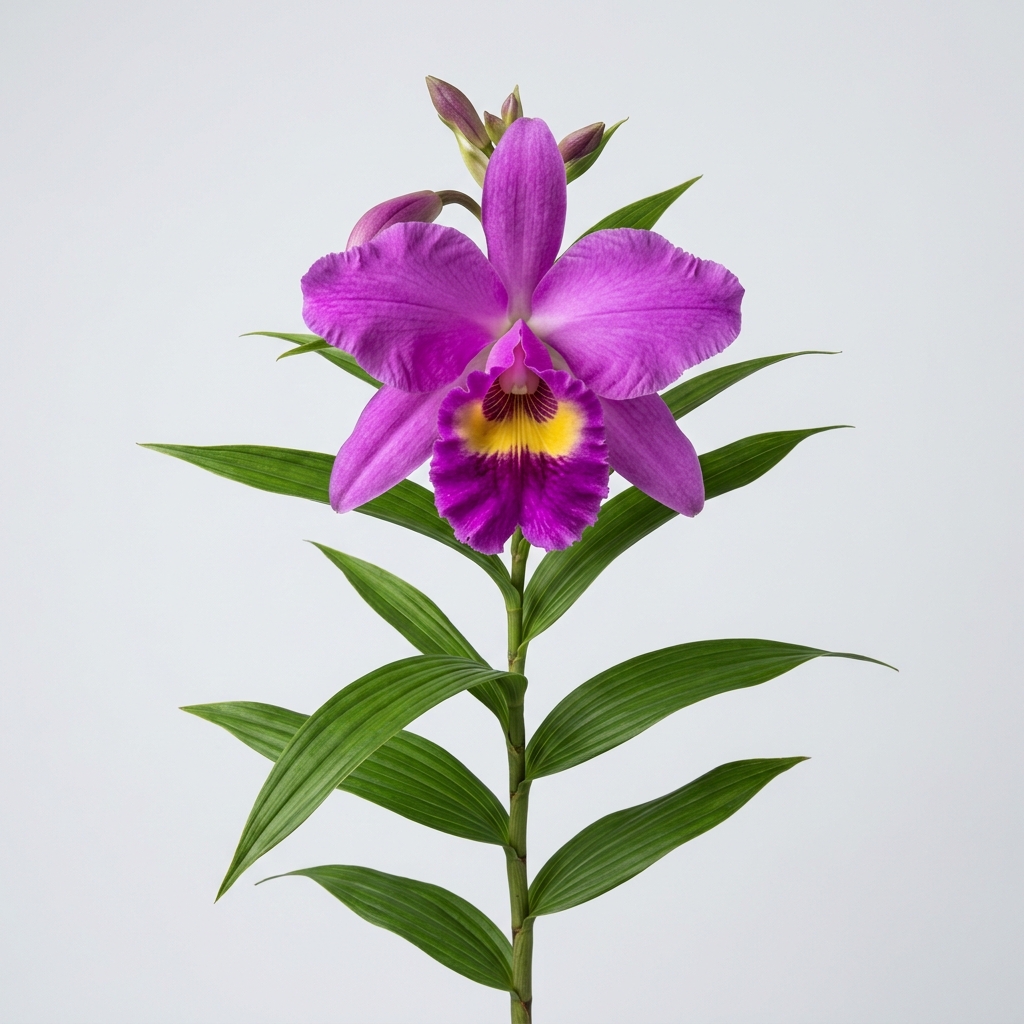
Sobralia Macrantha is a magnificent reed-stem orchid renowned for its large, cattleya-like blooms and impressive, bamboo-like growth habit. Native to the mountainous regions of Mexico and Central America, this species captures the attention of orchid enthusiasts with its towering stems and dramatic, short-lived flowers that offer a spectacular, albeit fleeting, display of vibrant color.
Cultivating this orchid requires an understanding of its terrestrial-like growth habit and preference for consistent moisture compared to typical epiphytic orchids. While its individual flowers may only last a day or two, a mature specimen produces a succession of blooms over several weeks, making it a highly rewarding centerpiece for spacious greenhouses or indoor growing areas with ample vertical room.
💡 Did You Know?
Sobralia Macrantha is known for its incredible reed-like stems that closely resemble bamboo. In their native Central American habitats, these impressive canes can grow up to eight feet tall, making them some of the tallest orchids in the world.
🌿 Botanical Overview
Sobralia Macrantha is characterized by its unique vegetative structure, which closely resembles wild bamboo or reeds. Unlike many popular cultivated orchids, it does not possess pseudobulbs for water storage. Instead, it produces tall, slender, cane-like stems that can reach heights of several feet under optimal cultivation conditions. These canes are clad in attractive, deeply pleated (plicate) leaves that remain evergreen, providing year-round visual interest even when the plant is not in bloom.
In its native habitats of Mexico, Guatemala, and El Salvador, this species typically grows as a terrestrial plant in organic-rich soils or as a lithophyte on steep, rocky banks. It thrives in areas where its roots can access constant moisture and leaf litter, while its foliage reaches upward toward the bright canopy light. This natural growth habit dictates its care requirements in home and greenhouse environments.
🌸 Flower Characteristics
The flowers of Sobralia Macrantha are among the largest and most spectacular in the orchid world, often measuring between six and ten inches across. The petals and sepals are typically a rich magenta, lavender, or soft pink, displaying a delicate, crepe-paper-like texture. The most prominent feature is the large, trumpet-shaped lip (labellum), which features a beautifully ruffled margin and a contrasting yellow or white throat that guides pollinators.
These magnificent blooms emerge sequentially from the apex of the mature canes. While a single flower typically lasts only twenty-four to forty-eight hours, the plant compensates by producing a succession of buds from the same terminal bract. A large, well-established specimen with multiple canes can remain in an active blooming cycle for several weeks as new flowers continuously replace the old ones.
Fragrance & Bloom Profile
The fragrance of Sobralia Macrantha is generally described as light, sweet, and subtly floral. Because the individual blooms are short-lived, the scent is most pronounced during the morning hours of the first day the flower opens. The fragrance is delicate and rarely overpowering, making it a pleasant addition to indoor growing spaces.
Due to the ephemeral nature of the flowers, this species is rarely used for commercial cut-flower arrangements. Instead, its value lies in its dramatic garden or greenhouse presentation. The rapid transition from a tightly closed bud to a massive, fully open bloom is a captivating process that growers highly anticipate each season.
Parentage & Hybrid Lineage
Sobralia Macrantha is a naturally occurring species rather than an artificial hybrid. While there are select horticultural forms, such as the pure white Sobralia Macrantha var. alba, the primary species remains the most widely grown and sought-after representative of the genus. Its genetic line is highly stable, and it has been used sparingly in hybridization due to the challenges of breeding within this specific group.
In common grower references, registered hybrids involving Sobralia are relatively uncommon compared to the extensive hybrid registries of Cattleya or Phalaenopsis. Consequently, plants sold under this name are almost always true species specimens, preserving the wild characteristics and majestic growth habit found in their native Central American habitats.
🌱 Growing Conditions
To cultivate Sobralia Macrantha successfully, growers must provide bright, filtered light. It can tolerate some direct morning sun, but harsh afternoon sunlight can easily scorch the thin, pleated foliage. If the leaves begin to turn yellow or develop dry, brown patches, it is often an indication that the light intensity is too high or that the plant requires more shade.
💡 Care Tip
To prevent leaf tip burn and keep the pleated foliage pristine, always use pure rainwater, distilled water, or reverse osmosis water, as this species is sensitive to mineral buildup from tap water.
Temperature: wise, this orchid thrives in intermediate to warm conditions. Daytime temperatures between 70°F and 85°F are ideal, with a slight drop at night to around 60°F to 65°F. High humidity is crucial for maintaining the health of the foliage and preventing bud blast. Aim for a relative humidity level of 50% to 75%, supported by active air movement to prevent stagnant air from encouraging fungal pathogens.
Watering, Feeding & Potting Media
Unlike epiphytic orchids that require their roots to dry out completely between waterings, Sobralia Macrantha prefers to remain evenly moist. Because it lacks pseudobulbs, it has very little water-storage capacity and can quickly suffer from dehydration if left dry for extended periods. Water the plant thoroughly as soon as the top inch of the medium begins to feel slightly dry to the touch.
The potting medium must be highly organic yet exceptionally well-draining to accommodate the plant’s terrestrial nature. A mix consisting of medium-grade fir bark, peat moss, perlite, and a small amount of horticultural charcoal works well. Feed the plant regularly during the active spring and summer growing seasons with a balanced, water-soluble orchid fertilizer diluted to half or quarter strength.
Blooming Season & Care Notes
The primary blooming season for Sobralia Macrantha occurs during the late spring and summer months. As the flowering cycle approaches, monitor the tips of the canes for the appearance of the flattened, green bracts from which the buds will emerge. Avoid moving the plant or changing its environmental conditions during this time, as sudden shifts in temperature or humidity can cause the developing buds to yellow and drop.
Once the blooming cycle is complete, do not cut back the green canes. These canes continue to photosynthesize and provide vital energy to the root system and emerging new shoots. Only remove canes that have turned completely brown, dry, and woody. Repotting should be done with caution, as Sobralia species dislike root disturbance and may take a season or two to recover and bloom again after being divided or repotted.
⚠️ Common Issues
⚠️ Common Mistake
The most common mistake is letting the potting medium dry out completely between waterings. Lacking water-storing pseudobulbs, this orchid will quickly drop leaves and abort developing flower buds if subjected to drought.
- Leaf Tip Burn: Often caused by low humidity, underwatering, or a buildup of fertilizer salts in the potting medium. Flush the pot with pure water regularly.
- Spider Mites:
These pests are attracted to the thin, pleated leaves, especially in warm, dry conditions. Maintain high humidity and treat with insecticidal soap if detected. - Root Rot:
Occurs when the potting medium becomes compacted and waterlogged, suffocating the roots despite the plant’s preference for moisture. - Bud Blast:
The premature drying and dropping of buds, usually triggered by sudden drafts, low humidity, or extreme temperature fluctuations.
❓ Frequently Asked Questions
Why do my Sobralia Macrantha flowers fade so quickly?
It is a natural botanical characteristic of the Sobralia genus for individual flowers to last only one to two days. However, a healthy, mature plant will produce a succession of buds from the same cane, providing a longer overall blooming display.
How often should I water Sobralia Macrantha compared to other orchids?
Unlike epiphytes like Cattleyas, Sobralia Macrantha should never dry out completely. Water it frequently enough to keep the potting medium evenly and consistently moist, but ensure the pot drains freely to prevent stagnant water.
Can Sobralia Macrantha be grown indoors without a greenhouse?
Yes, it can be grown indoors if provided with bright, indirect light from a south or west-facing window and supplemental humidity. However, its tall, reed-like growth habit requires significant vertical space as the plant matures.
What is the best potting mix for Sobralia Macrantha?
A well-draining terrestrial mix is ideal. Combine medium-grade orchid bark with peat moss, perlite, and charcoal to retain moisture while allowing excellent aeration and drainage for the root system.
⭐ Final Growing Notes
While Sobralia Macrantha requires more physical space and more frequent watering than many common household orchids, its breathtaking, large blooms and elegant bamboo-like foliage make it an incredibly rewarding species to cultivate. By mimicking its native terrestrial environment with consistent moisture, high humidity, and bright, filtered light, growers can enjoy the spectacular, sequential summer floral displays of this truly majestic orchid.
⚕️ Health, Safety & Edibility
Understanding how a plant interacts with people, pets, and the surrounding environment is part of responsible cultivation. This section uses conservative, general guidance and does not replace professional medical or veterinary advice.
Human Safety: Species-specific human toxicity data for Sobralia Macrantha is limited. Use conservative handling practices and avoid intentional consumption.
Pet Safety: Pet-specific safety information for Sobralia Macrantha is limited, so keep it away from animals that commonly chew plants.
Edibility: Sobralia Macrantha should not be treated as edible. Ornamental specimens may contain natural irritants or horticultural residues that make them unsuitable for consumption.
Skin Contact: Skin irritation is not well documented for this plant, but gloves are sensible when repotting, pruning, or handling potting media.
🌱 Propagation Tip
Propagate Sobralia Macrantha by division during repotting. Because they lack pseudobulbs, ensure each division contains at least three to four healthy, active canes and a robust, intact root system to minimize transplant shock.
⭐ Expert Advice
To maximize the blooming period, focus on growing the plant into a large, multi-cane specimen. A larger clump will produce a continuous succession of flowers over several weeks, compensating for the short lifespan of individual blooms.

Leave A Comment